ATV December 2025 Contest – Dwingeloo 25 m schotel luistert mee

Tijdens de ATV-decembercontest is de 25-meter schotel in Dwingeloo opnieuw actief als ontvangstation. Op zondag 14 december 2025 luisteren Jan PA3FXB, Erik PA1ET en Jaap PA0T van 07:00–12:00 UTC (08:00–13:00 lokale tijd) op 70 cm, 23 cm, 13 cm en 9 cm, analoog én digitaal.

Er wordt alleen ontvangen, terrestrial zenden mag niet vanuit de schotel. Het is de ideale kans voor kleine en/of verre stations om hun DX te verbeteren. De heren zijn op de dag bereikbaar via DXSpot of Zello voor skeds.

Jaap PA0T, Erik PA1ET, Gerard PE1BBI en Jan PA3FXB in de telescoop tijdens ATV-ontvangst

Heelweg Microwave Meeting 2026 – meetdag voor VHF en hoger

Op zaterdag 17 januari 2026 is de jaarlijkse Heelweg Microwave Meeting in Kulturhus “De Vos” (Halseweg 2, 7054 BH Westendorp), van 10:00–15:30. Dé dag om je VHF/ UHF/µwave-apparatuur uitgebreid te meten, afregelen en vergelijken: van transverters en filters tot vermogensmetingen en ruisgetalchecks. Ideaal voor wie actief is op VHF en hoger.

KAR Radiomarkt 2025 in Bladel – met lezingen over EME en (RB-)DATV

Op zondag 21 december 2025 keert de KAR Radiomarkt terug, ditmaal op de prachtige nieuwe locatie Gemeenschapshuis Bruis (Markt 6, Bladel). Naast de verkoop van radio- en elektronica-artikelen is er een lezingenprogramma met onderwerpen voor VHF en hoger—waaronder moonbounce (EME) en (RB-)DATV.
De markt is geopend van 10:00–16:00 uur, entree € 6,00.
Meer informatie en updates: pi4kar.com. De officiele flyer staat hieronder:

Uitslag DATV contest augustus 2025

De uitslag van de DATV contest is gepubliceerd en staat op onze vhf-en-hoger website.

Zoek onder Contesten –> Contest uitslagen–> DATV augustus

Poll, PA3BYV is de winnaar van de augustus DATV contest. Proficiat!


73 de Hans PA0WYS

Logsheet versie 6 voor de ATV en DATV activiteitweekenden

Logsheet versie 6 voor de ATV en DATV activiteitweekenden

We hebben een nieuwe versie van het (excel) logsheet gepubliceerd op deze website. Dit is versie 6.  Bij deze het verzoek om versie 6 van het logsheet voortaan te gebruiken voor de ATV en DATV contest/activiteitweekenden.  Tevens is het ATV en DATV contestreglement aangepast.

Het nieuwe logsheet en het reglement kan je downloaden  op deze pagina onder ATV Contest/Activiteitweekend. (link)

Uitslag ATV contest september 2023

De uitslag van de ATV contest september 2023 is bekend en staat op onze website.

Kijk onder VHF-en-hoger, Contesten, contest  uitslagen.

Jack, PA0BOJ heeft deze maand wederom de meeste competitiepunten vergaard. Proficiat!


ADSB network for AIRSCOUT

ADSB network for AIRSCOUT

Het bekende Airscout computerprogramma was het laatste jaren moeilijk te gebruiken ivm het minder beschikbaar zijn van vrij toegankelijke radar data feeds met de posities van vliegtuigen. OV3T heeft onlangs het initiatief genomen om zelf een ADSB Ham data netwerk op te zetten. Inmiddels is een indrukwekkend ADSB Ham data netwerk van radar stations opgebouwd. Dit zijn radio zendamateurs die vrijwilliger hun ontvanger hebben aangesloten op het netwerk. Een goed voorbeeld van Hamspirit.

De dekking loopt nu van Trondheim in het noorden toy Rome in het zuiden. Van Dublin tot Bukarest. Er zijn nog stations nog in schotland, frankrijk om het netwerk uit te bereiden.

Airscout aansluiten op het HAM ADSB data netwerk

Ben je een enthousiaste VHF-UHF-SHF amateur en wil je ook verbindingen maken via airplane scatter dan is Airscout een onmisbaar hulpmiddel.
Wil je airscout aansluiten op het netwerk dan staat op de website van OV3T een instructie hoe Airscout moet instellen. Ook is autorisatie nodig en daarvoor moet je hem een email sturen met je radio roepnaam.

Meer info

  • Airscout
  • Facebook groep: “ADSB data for Airscatter” meer bedoeld voor beheerders radar stations.
  • Facebook groep “Aircraft Scatter” meer bedoeld voor geinteresseerden voor vliegtuig scatter verbindingen.
  • Aircraftscatter website van W3SZ
  • In de VHF rubriek van de volgende nummers van Electron: ….


ISS Schoolcontact met Den Haag, donderdag 12:11 (lokale tiid)

Op donderdag 8 dec om 12:11, lokale tijd, is er een ISS schoolcontact met The British School in The Hague.

De spreektaal voor deze school is zoals de naam al zegt de engelse taal.

Gedurende de afgelopen weken is er op de school uitgebreid aandacht besteed aan het onderwerp techniek en ruimtevaart. Dit alles natuurlijk op het niveaau van de leerlingen.

16 kinderen in de leeftijd van 4 – 10 jaar krijgen dan de gelegenheid een vraag aan Jos Cassada te stellen.

De vragen zijn:

  1. 4 years     – Carson: Why do you need a helmet?
    2. 4 years – Liam: What is the moon made of?
    3. 4 years    – Florine:  In space, is there a toilet and can you use a telephone?
    4. 5 years    – Jamie:  Is there weather in space?
    5. 5 years    – Alp: Is it relaxing in space?
    6. 6 years    – Kofi: If this planet is destroyed can we set up on other planets?
    7. 6 years    – Ashna: What would you do if one of the astronauts were sick or injured?
    8. 6 years    – Aylin: Are you happy to live in the space station?
    9. 8 years    – Isabella: What inspired you to be an astronaut?
    10. 8 years  – David: What did you feel when you found out that you were going to space?
    11. 9 years   – Beatriz: Have you ever seen a volcano explode from space, and how was it.
    12. 8 years   – Cyrus: What happens if the oxygen runs out?
    13. 9 years   – Thanos: How well do plants grow in space?
    14. 9 years   – Seungjae: How often do you do space walks?
    15. 10 years – Hanson: What is the strangest thing you have ever said to mission control?
    16. 10 years – Evaan: Why does the sun shine on earth but not the rest of space?

Overzicht VHF en hoger rubriek Electron juli 2022

Bij Weak Signals lezen we over de propagatie mode waarbij Rob als ON/PE1ITR (locator JO20EE) op 2 januari werkte met IT9GSF (locator JM67SS). Dit was een verbinding over 1561 km. Het artikel gaat in hoe op basis van meteorologische gegevens kan worden afgeleid dat we hier te maken hadden met een 800 km lange “elevated duct”. Verder wordt in het artikel nog wat verder ingegaan op het gedrag van radiogolven in de troposfeer, de onderste 10-15 km van de atmosfeer.

Deze duct was op zichzelf niet lang genoeg, maar een combinatie met vliegtuigscatter maakte deze verbinding mogelijk.


Bij EME meldt Harry PE1CHQ zich na een periode van afwezigheid weer met VHF nieuws. Harry is al wat langere tijd actief op 23cm met EME maar wil nu gaan experimenteren met EME op 10 GHz.

Harry had nog een bouwpakket voor een 1,8m schotel en nog een voor een 2,4 m schotel.

Eerst maar een de 1,8m schotel aanpakken. Ook moest er nagedacht gaan worden over een volgsysteem, liefst zonder al te grote investering. Harry vond een geschikt systeem beschreven door VE2ZAZ. Ook werd bij de firma Kuhne wat spulletjes besteld om 10W op 3 cm te kunnen maken.

Jac PA3DZL maakte een mooi aantal verbindingen via EME, een was met Jay, speciale call  N1V die actief was vanaf Hawaii. Jay moest met de hand zijn schotel op de maan gericht houden wegens de harde wind!


Bij ATV hebben we de uitslag van de DATV contest van april 2022. De belangstelling was wat kleiner dan bij de vorige DATV-contest. De winnaar is Jaap PA0T, op de tweede en derde plaats eindigden Renny PE1ASH en Patrick ON1BTE.


20 februari – ARISS Europe to Perform a Special Digital SSTV Experiment

ARISS Europa start op 20 februari een speciaal Digitaal SSTV Experiment.

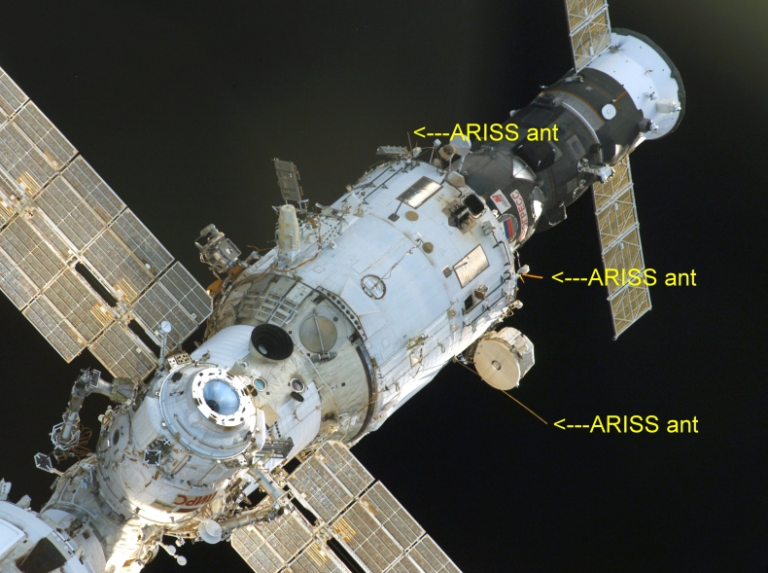
Na geruime voorbereidingen heeft ARISS (Amateur Radio on the International Space Station)
bekend gemaakt een speciaal SSTV expriment in het ruimtestation ISS te starten.

ARISS is de organisatie die speciale amateur radio aktiviteiten tussen radio amateurs scholen en studenten verzorgt met gelicenceerde astronauten aan boord van ISS.

Naar aanleiding van het enorme succes van de regelmatig voorkomende analoge SSTV uitzendingen heeft het ARISS Europa team het maken van digital SSTV uitzendingen ontwikkeld.
Bijzonder aan deze uitzendingen is dat hierbij gebruik gemaakt gaat worden van de “voice repeater” in ISS. Met andere woorden: de digitale beelden worden door een of meer grondstations naar ISS verzonden en zijn dan voor eenieder te ontvangen. Hierbij wordt van de amateur gemeenschap gevraagd de repeater vrij te houden tijdens de testperiode op 20 februari.
In de toekomst zullen voor deze digitale uitzendingen andere frequenties dan de nu geplande repeater gebruikt als blijkt dat de digitale SSTV beelden goed te ontvangen zijn.

Kijk voor meer info en het laatste nieuws in het Nederlands op: https://amsat-nl.org/?page_id=568

De benodigde software voor het decoderen van de digitale sstv uitzending is te vinden via:

http://amsat-nl.org/wordpress/wp-content/uploads/2022/02/kgstv_ISS.zip

73’s
Bertus, PE1KEH

——————————————————————–
Hieronder volgt de volledige pers publicatie van ARISS in het Engels
met meer informatie over tijden, frequenties en uitzendmodus.
——————————————————————–

ARISS Europe to Perform Special Digital SSTV Experiment

February 15, 2022—Amateur Radio on the International Space Station (ARISS) is planning for a special SSTV experiment. ARISS is the group that puts together special amateur radio contacts between students around the globe and crew members with ham radio licenses on the International Space Station (ISS) and develops and operates the amateur radio equipment on ISS.

As part of its ARISS 2.0 initiative, the ARISS International team is expanding its educational and life-long learning opportunities for youth and ham radio operators around the world. ARISS Slow Scan Television (SSTV), which is the transmission of images from ISS using amateur radio, is a very popular ARISS mode of operation. To expand ARISS SSTV capabilities, the ARISS Europe and ARISS USA teams plan to perform special SSTV Experiments using a new SSTV digital coding scheme. For the signal reception, the software “KG-STV” is required, as available on internet.

We kindly request that the amateur radio community refrain from the use of the voice repeater thin this SSTV experiment on 20th of February 2022 over Europe.


This is a unique and official ARISS experiment. We kindly request keeping the voice repeater uplink free from other voice transmissions during the experiment time period. Also note that ARISS is temporarily employing the voice repeater to expedite these experiments and make a more permanent, more expansive SSTV capability fully operational on other downlink frequencies.

The first experiment in the series will utilize ARISS approved ground stations in Europe that will transmit these digital SSTV signals. These will be available for all in the ISS footprint when SSTV transmissions occur. The first SSTV experiment is planned for 20 February 2022 between 05:10 UTC and 12:00 UTC for five ISS passes over Europe. Please be aware that this event depends on ARISS IORS radio availabilities and ISS crew support, so last-minute changes may occur.

To promote quick experimental SSTV investigations—to learn and improve–the ARISS team will employ the ISS Kenwood radio in its cross-band repeater mode. The crossband repeater operates on a downlink of 437.800 MHz. Each transmission sequence will consist of 1:40 minute transmission, followed by 1:20 minute pause and will be repeated several times within an ISS pass over Europe.

The used modulation is MSK w/o error correction. For the decoding of the 320 x 240 px image, the software KG-STV is required. The KG-STV software can be downloaded from the following link: “http://amsat-nl.org/wordpress/wp-content/uploads/2022/02/kgstv_ISS.zip

The ZIP file contains the KG-STV program, an installation and setup manual, some images and MP3 audio samples for your first tests as well as links for additional technical information about the KG-STV use.

The members of the ham radio community youth and the public are invited to receive and decode these special SSTV signals.

Experiment reports are welcome and should be uploaded to “sstvtest@amsat-on.be

More information will be available on the AMSAT-NL.org web page: “https://amsat-nl.org/?page_id=568

(for the team: Oliver Amend, DG6BCE)

—–

About ARISS:

Amateur Radio on the International Space Station (ARISS) is a cooperative venture of international amateur radio societies and the space agencies that support the International Space Station (ISS). In the United States, sponsors are the Radio Amateur Satellite Corporation (AMSAT), the American Radio Relay League (ARRL), the ISS National Lab-Space Station Explorers, Amateur Radio Digital Communications (ARDC) and NASA’s Space communications and Navigation program. ARISS Europe is in close cooperation with the European Space Agency and its national space agencies, the space industry and the amateur radio member associations. The primary goal of ARISS is to promote exploration of science, technology, engineering, the arts, and mathematics topics. ARISS does this by organizing scheduled contacts via amateur radio between crew members aboard the ISS and students. Before and during these radio contacts, students, educators, parents, and communities take part in hands-on learning activities tied to space, space technologies, and amateur radio. For more information, see www.ariss.org and www.ariss-eu.org.